Somerville College’s Honorary Fellow Afua Kyei (2000, MChem) was a guest of honour this month at a Royal Society conference celebrating 80 years of admitting women to its Fellowship.
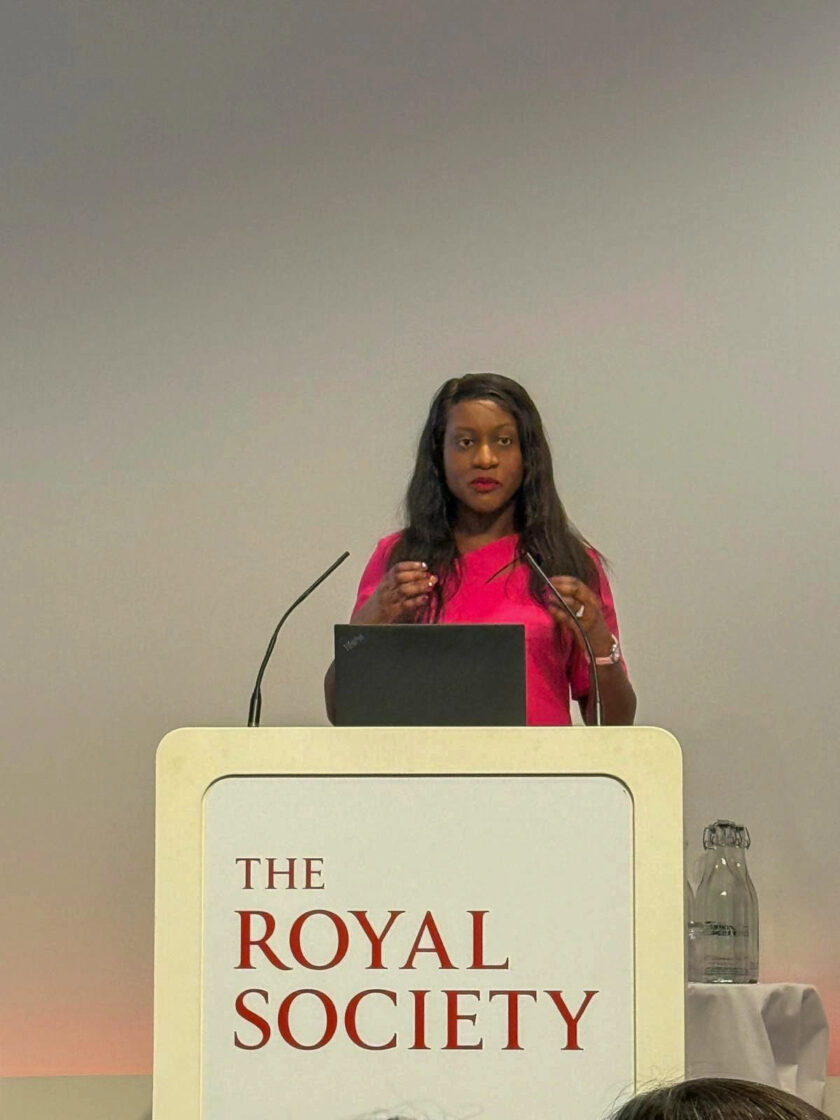
Afua addresses the Royal Society on 10th March 2026
The Royal Society conference, entitled “Women and the future of science”, celebrated the achievements of inspirational leaders in science today, and highlighted perspectives from scientists at the forefront of addressing global challenges such as climate change, AI, and the importance of inclusive leadership.
Honorary Fellow Afua Kyei is CFO of the Bank of England, where she holds direct responsibility for the financial governance of the Bank’s balance sheet, which peaked at over £1.1 trillion during the pandemic. Afua was appointed to the role in 2019, making her both the Bank’s youngest Executive Director at 36, as well as the Bank’s first Black executive in its 331-year history.
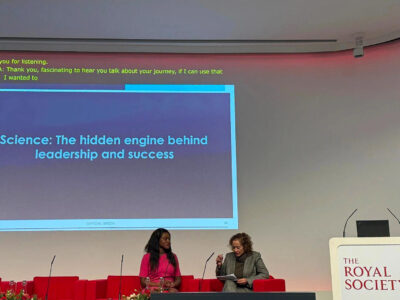
In her keynote talk, entitled: “Science: The Hidden Engine behind Leadership and Success”, Afua spoke about what inspired her to read a STEM subject before explaining how STEM is at the heart of the Bank of England’s work. This includes both practical applications, such as the security features used in polymer bank notes, as well as strategic ones, such as the incorporation of data science and the Bank’s responses to climate change through policy.
Afua also described how STEM has informed her own approach to leadership and problem-solving. She drew special attention to the role of Somerville in shaping her path, and cited the influential examples of Somerville’s most famous chemists, Dorothy Hodgkin and Baroness Thatcher.
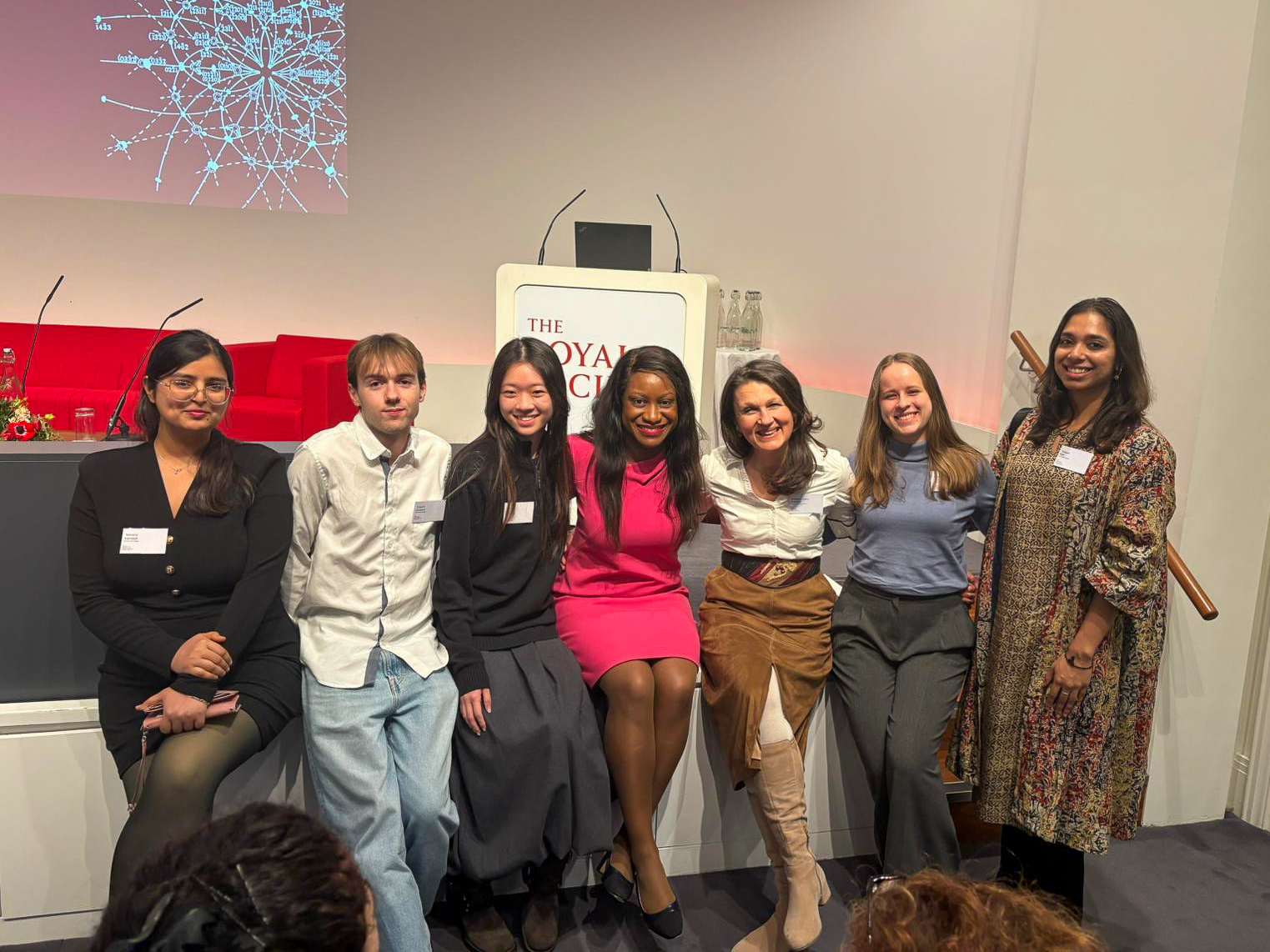 Afua meeting current Somerville students following her keynote
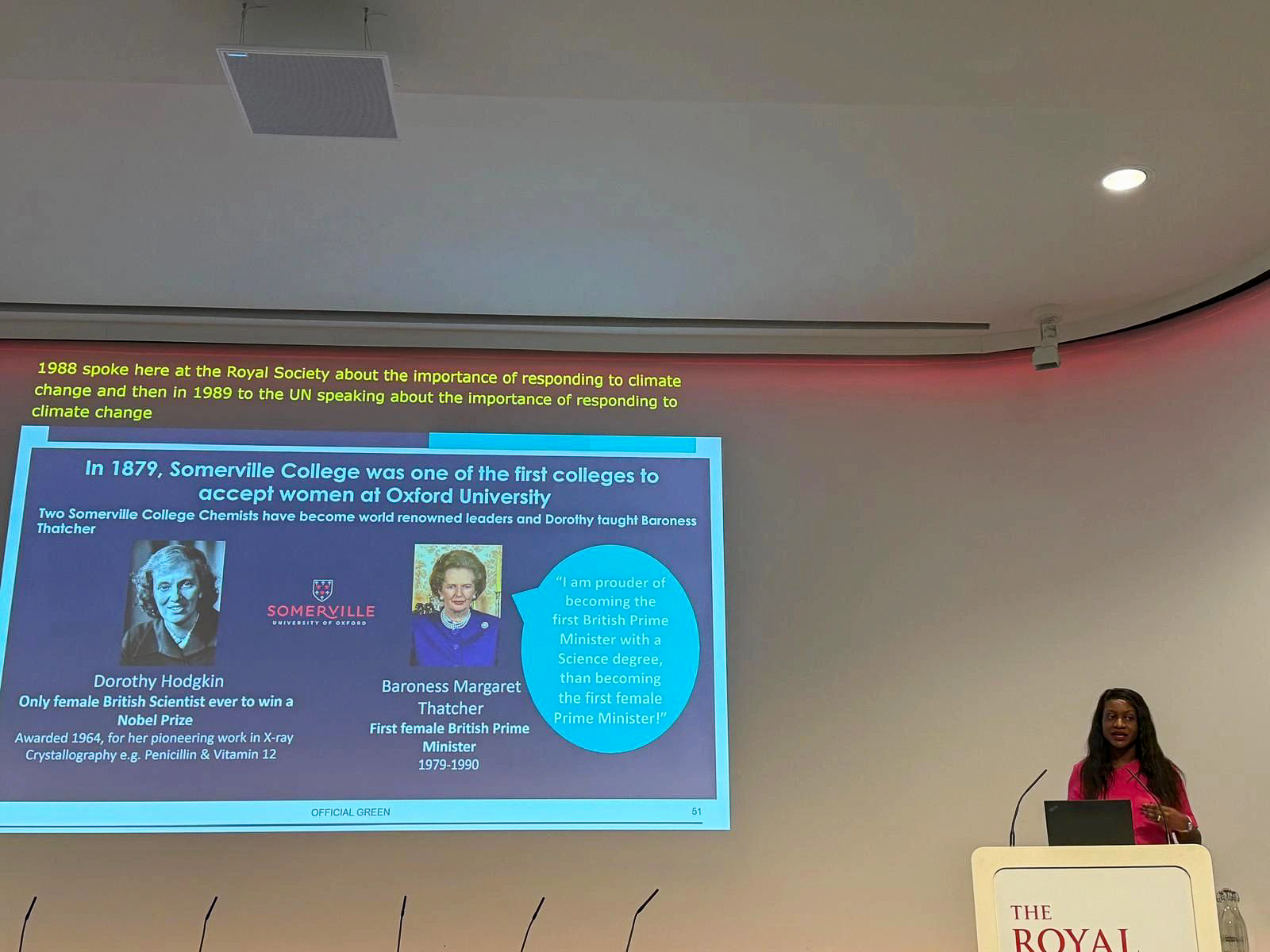 Afua delivers her keynote, referencing other famous Somerville chemists
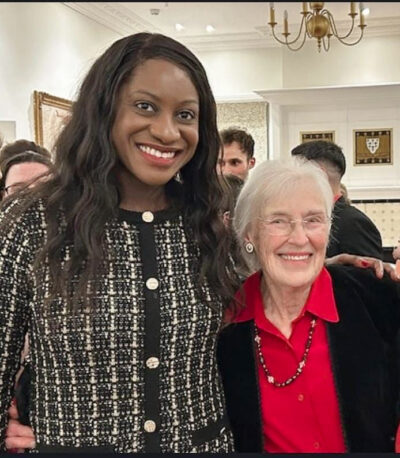
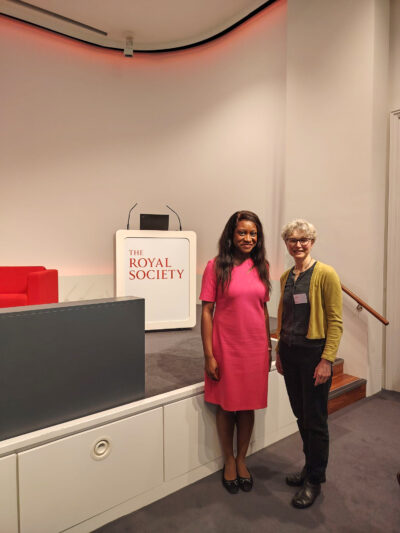
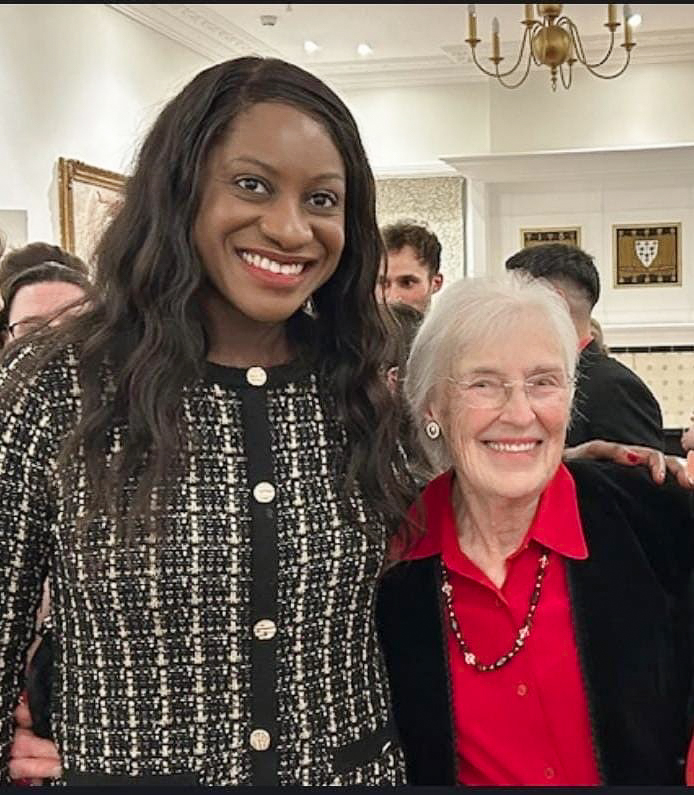 Afua meets her former Organic Chemistry tutor, Dr Jo Peach, at the Somerville College Foundation Day Dinner
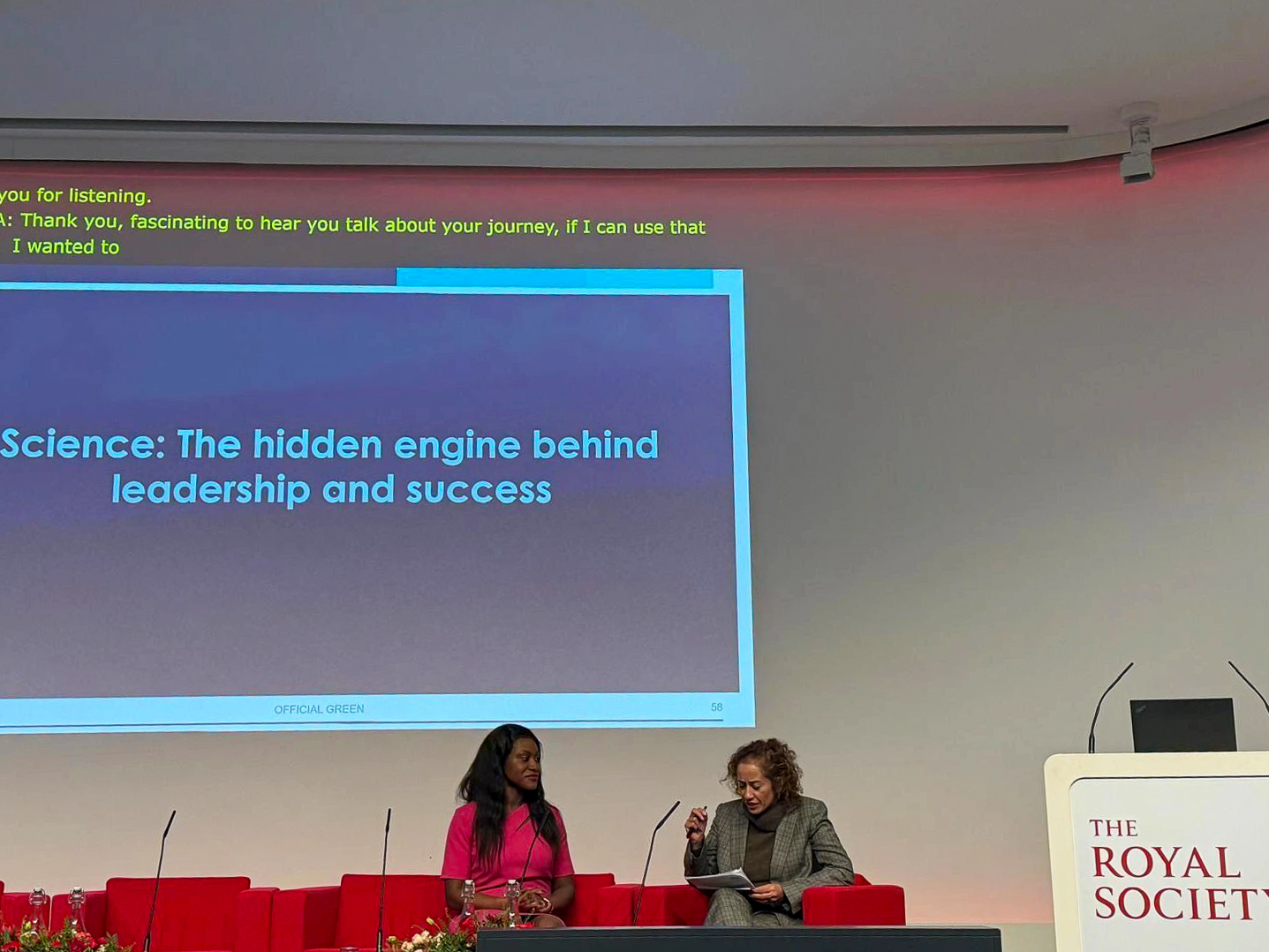 Afua being interviewed at the Royal Society by BBC journaist Samira Ahmed
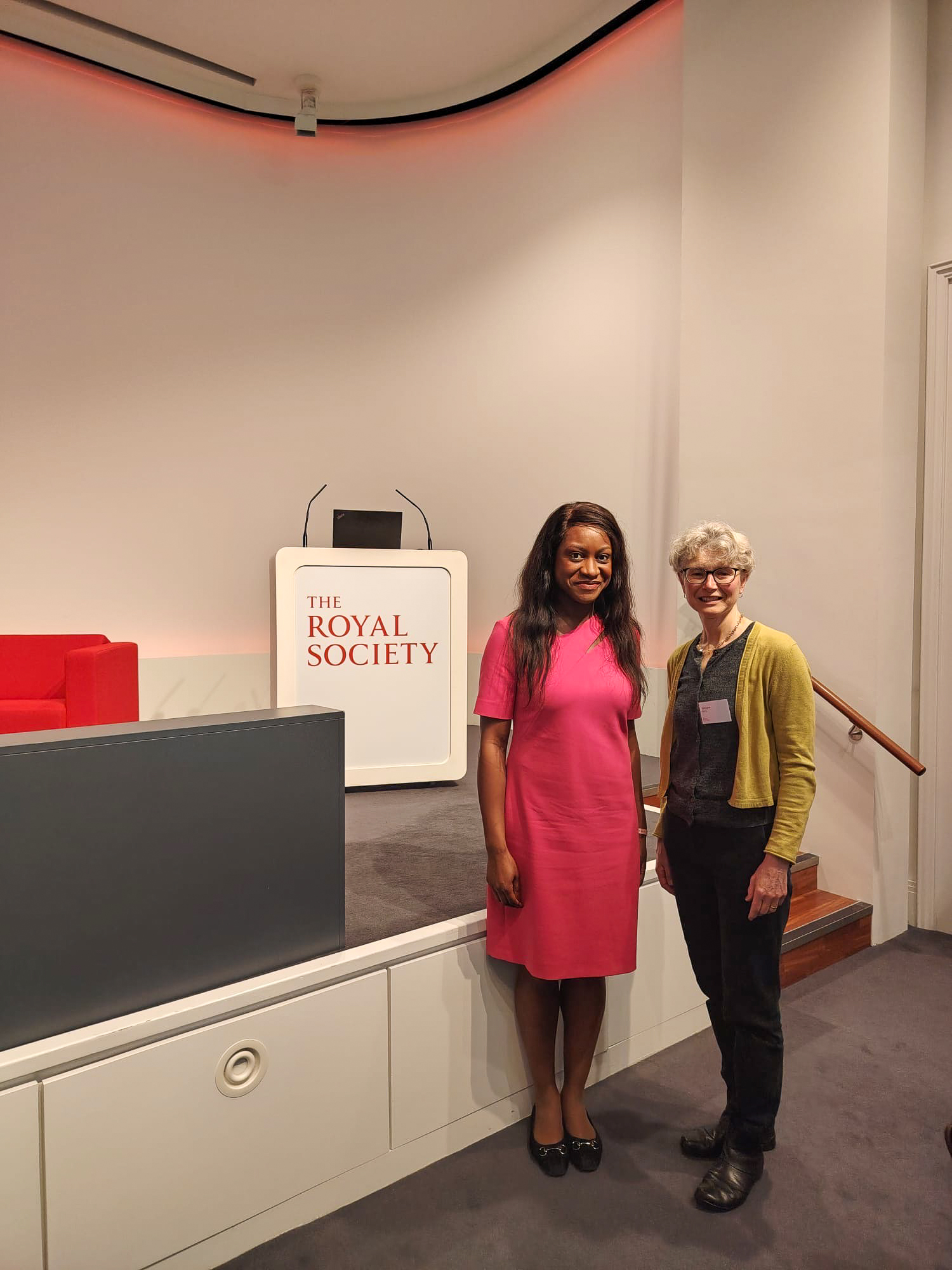 Afua meets Georgina Ferry, author of the definitive biography of Dorothy Crowfoot Hodgkin
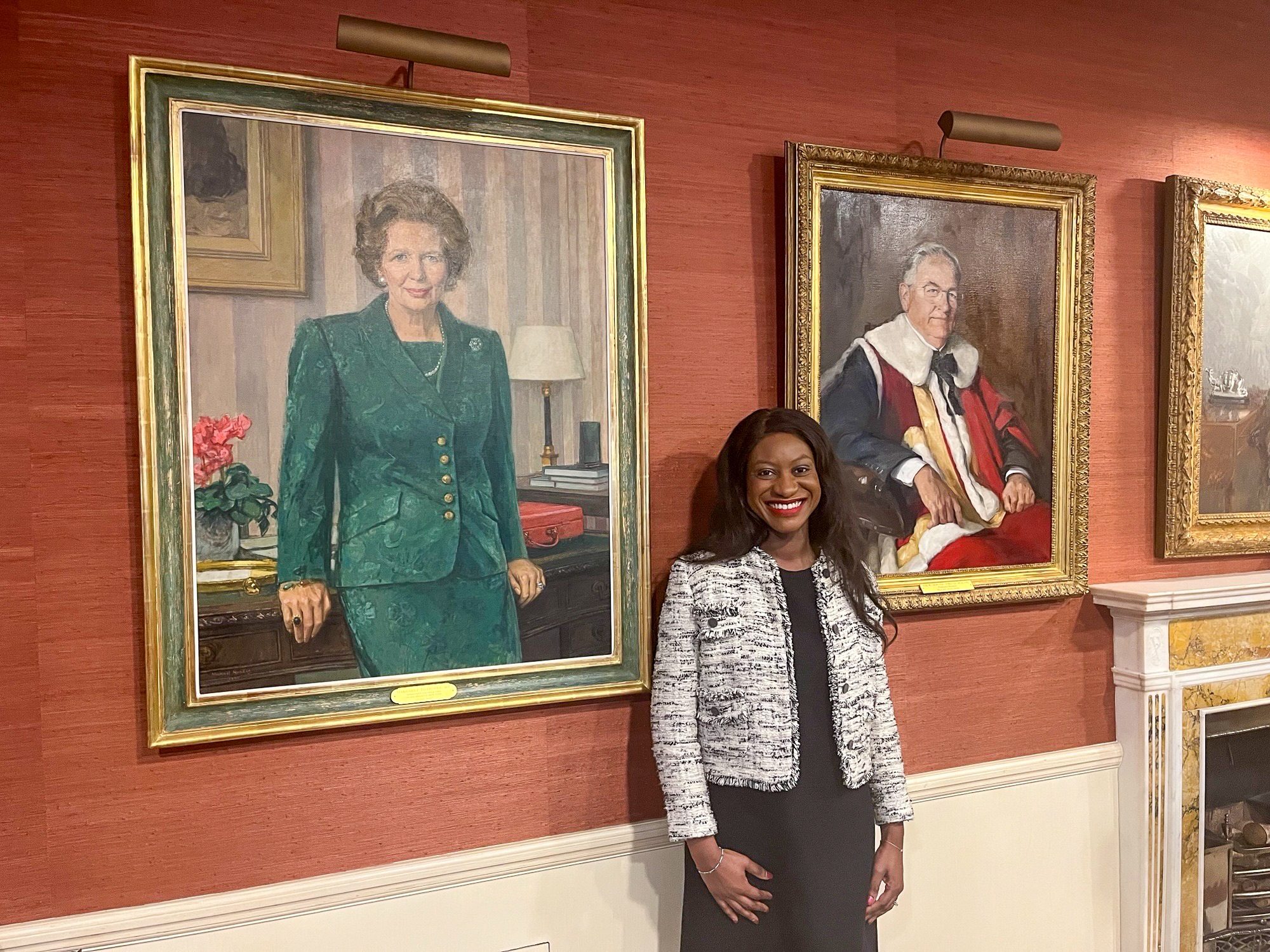 Afua pictured alongside former inductees to the Grocers
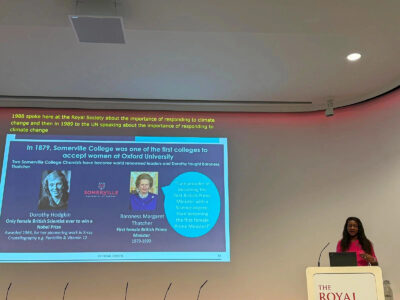
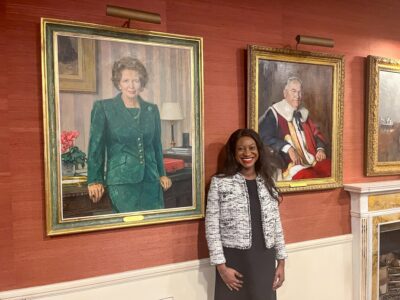
Dorothy Hodgkin, Afua noted, is still the only British woman to win a Nobel for Science, for her pioneering use of X-ray crystallography. Baroness Thatcher, meanwhile, is noteworthy for being the first scientist Prime Minister of Britain, an achievement of which Thatcher was allegedly prouder than her status as first woman PM. Afua added that Baroness Thatcher was also the first world leader to address the Royal Society on our collective responsibility to address the threat of climate change in her 1988 speech at Fishmongers’ Hall.
Afua was kind enough to invite several current Somervillians to join her at this special occasion, which also featured Professor Judith Howard FRS CBE (1966), and was due to feature Dame Professor Angela McLean FRS (1979). We sincerely thank Afua for involving future generations in the inspiring story of STEM at Somerville.
Finally, we are delighted to congratulate Afua on a further honour, that of being made a member of the Grocer’s Company by redemption. Both Baroness Thatcher and Eddie George, former Bank of England Governor, were honorary members, and the Bank’s first Governor, Sir John Houblon, was Master of the Grocers.
Somerville and the Royal Society: A Timeline
1826 – Mary Somerville presents her paper “The Magnetic Properties of the Violet Rays of the Solar Spectrum” to the Royal Society. Aside from the astronomical observations of Caroline Herschel, it is the first paper by a woman to be read to the Royal Society and published in its Philosophical Transactions.
1827 – Lord Broughton asks Mary Somerville to write a popularized rendition of Laplace’s Mecanique Céleste and Newton’s Principia. This work, in which Somerville expands significantly on Laplace, becomes a best-seller and makes Mary Somerville world-famous.
1832 – In recognition of the success of the Mechanism of the Heavens, the Chantrey bust of Mary Somerville is made, and becomes the first representation of a woman to be displayed at the Royal Society.
1945 – Dorothy Hodgkin sits on the steps of the Royal Society and confides to her great friend J.D. Bernal that she has had a breakthrough in her work to determine the structure of penicillin. When Bernal correctly predicts that Dorothy will receive the Nobel Prize for this work, Dorothy replies that she would far rather the discovery pave her way for election as a Fellow of the Royal Society. Bernal jokes, “that’s more difficult”.
1947 – Despite Bernal’s prediction, Hodgkin is made a Fellow of the Royal Society, two years after the first women were elected to the Fellowship.
1964 – Dorothy Hodgkin receives the Nobel Prize in Chemistry for her use of X-ray crystallography to determine the structures of penicillin, vitamin B12 and insulin.
1976 – Dorothy Hodgkin receives the Copley Medal, the most prestigious award of the Royal Society, which is conferred “for sustained, outstanding achievements in any field of science”.
1979 – Janet Vaughan, Somerville College’s Principal from 1945-67, is made a Fellow of the Royal Society in recognition of her pioneering work in creating Britain’s blood banks, as well as her research into blood disease, the treatment of starvation, and the effect of radioactivity on the bone and bone marrow.
1983 – Margaret Thatcher, then-Prime Minister of Great Britain, is elected a Fellow of the Royal Society in recognition of the major political issues her administration faced that depended on scientific advice, notably the AIDS crisis, biomedical uses of human embryos, decisions over civil and military nuclear projects, acid rain, and climate change.
1988 – Baroness Thatcher addresses the Royal Society, where she takes the opportunity to advocate for “sustainable economic development” in order to counteract the growing threat of “climatic change”.
2026 – Afua Kyei and Angela McLean address the Royal Society on the occasion of celebrating 80 years of admitting women to its Fellowship.
Science and Somerville: A Noble Tradition
When Somerville College was founded in 1879, the family of Mary Somerville (1780-1872) was approached to ask if Mary Somerville’s name might be adopted as the ‘genius loci’ of the new institution. Mary Somerville was proposed by the committee because they felt that the standing of the Victorian “Queen of Science” as an astronomer, mathematician and scientific writer made her the ideal, rational figurehead for the progressive new institution.
In 1945, Janet Vaughan became the first scientist to lead Somerville College. Under her guidance, more Somervillians than ever read STEM subjects. By the time Dame Janet ended her Principalship in 1967, over 40% of students were reading science degrees.
The proud heritage of reading STEM subjects at Somerville can be seen in the long list of alumnae who have been elected as Fellows of the Royal Society. These include:
- Dorothy Hodgkin OM, 1947, Chemistry
- Dame Janet Vaughan, 1979, Physiology
- Baroness Margaret Thatcher, 1983, Statute 12
- Dame Professor Frances Kirwan, 2001, Mathematics
- Professor Judith Howard CBE FRS, 2002, Chemistry
- Dame Professor Kay Davies, 2003, Genetics
- Dame Professor Angela McLean, 2009, Mathematical Biology
- Professor Joanna Haigh, 2013, Atmospheric Physics
- Professor Julia Yeomans, 2013, Physics
- Professor Marian Dawkins, 2014, Zoology
- Professor Loeske Kruuk, 2023, Evolutionary Biology