We are saddened to report the death, on 3rd February 2026, of Professor Dame Carole Jordan, Tutor in Physics at Somerville from 1976 to 2008, and Wolfson Fellow in Natural Sciences from 1977.
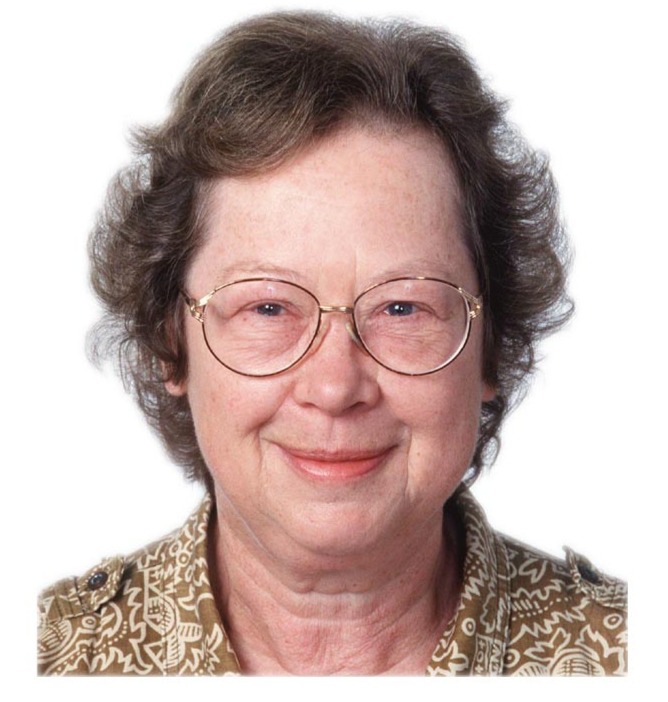
Professor Dame Carole Jordan
Subsequently a Fellow Emerita of Somerville College, Carole was an internationally renowned authority on the coronae of the Sun and cool stars.
Carole was a trailblazer for women in her subject. She was one of the first female professors of Astronomy at the University of Oxford and head of its Rudolf Peierls Centre for Theoretical Physics from 2003 to 2008. Made a DBE in 2006 for her services to physics and astronomy, she was the first woman to be President of the Royal Astronomical Society, from 1994 to 1996, and only the third to win the RAS Gold Medal, in 2005.
Her fellow Physics tutor at Somerville, Roman Walczak, remembers how strongly Carole wished to encourage women’s science research. ‘If you ask me what was Carole’s highest priority’, he remembers, ‘I would say: promotion of women. After she retired, whenever we met, she was always asking me the same question: How many of our female students continue to a PhD? And her comment to my answer was always the same: try harder’.
Educated at Harrow County Grammar School for Girls, Carole was an undergraduate at University College London, where she moved on to PhD study under the supervision of Australian astronomer, C. W. Allen. After time at the University of Colorado, Boulder, and at Culham, initially with the UK Atomic Energy Authority, she gained a professorship at the University of Oxford in 1996.
Carole Jordan’s career centred on the use of x-ray and UV spectra as plasma diagnostics. She was a pioneer of the calculations required to determine the relative number densities of elements in different stages of ionization. Her observations of ultraviolet spectra with Skylab, a NASA space station that orbited the Earth from 1973 to 1979, helped to develop understanding of helium-like ions — also known as two-electron atoms. As her career progressed, she became heavily involved with observations of stellar spectra, especially ones obtained from space platforms such as the International Ultraviolet Explorer (IUE) and the Hubble Space Telescope.
Throughout her career Carole worked on the interpretation of solar spectra. In both solar and stellar areas, she was the first to identify the atomic or molecular origins of many emission lines, including molecular fluorescence in cool giants that has revealed the inhomogeneous structure of their chromospheres.
Later, she transferred her solar techniques to the analysis of the spectra of cool stars. The broadening of emission lines in both dwarf and giant stars exceeds that expected from the local kinetic temperature. In dwarf stars she interpreted this broadening as being associated with the passage of magnetohydrodynamic waves through the outer atmosphere, which go on to heat the corona. Such waves can originate from magnetic field motions, or through magnetic reconnection, at low levels of the outer atmosphere. To test proposed theories, she developed techniques to determine from spectra the temperature of the plasma as a function of height and applied these to the Sun and many cool stars. Her reputation as an authority on the coronae of the Sun and cool stars is an international one.
Students and colleagues at Somerville valued Carole’s total commitment to science, her honesty, hard work and a forthright, no-nonsense approach to people and problems. She was tutor to generations of Somerville undergraduates and worked with graduate students across the Department. Current Lecturer in Physics at Somerville, Graeme Smith, whose DPhil was supervised by Carole comments that she was ‘completely dedicated to her work, and fiercely intelligent’. Many of her students recognise that fierce demand for their best work, yet she could be unexpectedly empathic and supportive in times of need. Meeting her years later at a College subject reunion, some of her early Somerville students remember, showed her to be very warm in valuing those who did not go on to pursue Physics.
Throughout her career Carole was active in the research community, and was an editor of Monthly Notices of the Royal Astronomical Society, Solar Physics, and The Observatory. A Fellow of the Royal Society since 1990, she was also a council member for both the Science and Engineering Research Council and the Particle Physics and Astronomy Research Council, and under SERC, Chair of the Solar System Committee. She served twice on the Council of the Institute of Physics and was its first Vice-President, Science.
Details of the College memorial that will be held for Carole later in the year will be posted here in due course.