New BBC drama The Rapture has come out at the perfect time, with its themes of extreme heat and a looming climate apocalypse.
Somervillian Liz Jensen (1978, English) wrote the novel which the show is based on in 2009, before going on to co-found the Extinction Rebellion Campaign group Writers Rebel. She joined us to discuss the BBC’s adaptation of her novel, cli-fi, and what comes next.
What were the first ideas you had that helped inspire The Rapture, a novel that deals with doomsday delusions, the cultish end of evangelism, disability, ecological collapse and family darkness?
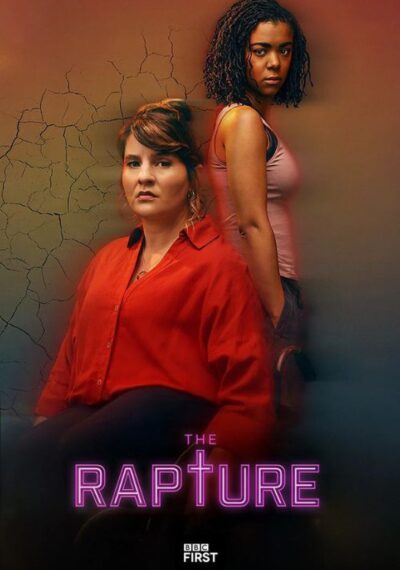
I was intrigued by the wildly opposing mind-sets of Christian evangelism and the ecological and climate movement, and their one point of intersection: a vision of a coming apocalypse. While hard-core Rapturists are excited about the heavenly rewards they believe the End Times will bring them, those who understand the science ask: What can we do to diminish the devastation that runaway global heating is already inflicting, and prevent its worst outcomes? I know which mind-set feels more Christian to me.
How involved were you in the process of adapting the novel for the BBC, and how do you feel about the process of adaptation?
Very little. I already knew from previous film and theatre adaptations of my work that the best thing to do is trust those who are adapting it, and to give them space. The Rapture was first published in 2009 and was optioned by various TV and film companies over the years until Mammoth Screen got hold of it, and the BBC commissioned it. It couldn’t have landed in better hands. When I read the final scripts, I was blown away by how intelligently the screenwriters writers Bryony Kimmings and Rebecca Manley had updated the story to fit today’s world. And when I saw it on screen, amidst heatwaves and wildfires, I realized it was coming to the screen at the perfect time. If the series moves the dial by a millimetre in the right direction, I’m happy. The other thing that’s timely is that its main character Gabrielle (played brilliantly by Ruth Madeley) is a real wheelchair-user who can bring her own experience to the role. Back when it was first optioned, most producers baulked at the idea of using a disabled actor to portray Gabrielle, and didn’t take it further. But in the 2020s it’s a no-brainer.
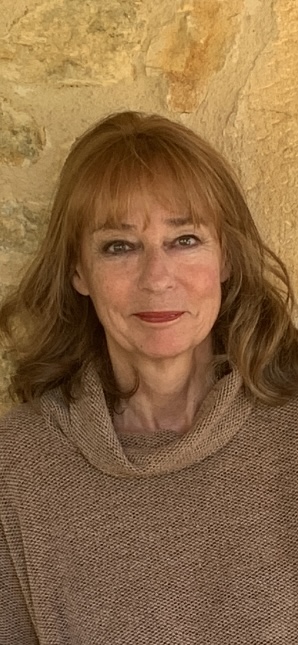
Author Liz Jensen. Credit: Matti Coleman
I’m fascinated by how writers write. Where would you place yourself on the spectrum between a-seat-of-the-pants-er and a full-on bible-of-backstory writer? On a related note, how much do you depend on editing, and does the voice or style you use have to be discovered for each new book?
Usually I begin with two things: a character, and a what-if question about something I’m curious about. I’ll write freely for three or so chapters, to get the narrative voice right and plant the Big Hook. It’s at this point that I know I could save time and effort by doing the story Bible, and the spreadsheet, and the narrative arcs, because they’re brilliant tools. And I always try. But somehow it ends up feeling a bit contrived and technocratic, and the thrill goes out of it. I guess I need not to know what happens in order to keep on writing. Editing is another matter. I enjoy re-writing more than writing, so that’s the fun part.
Your novels are very varied in their subject matter, taking in black comedy, sci-fi, satire, historical fantasy, psychological thrillers and memoir. What drives you to choose a project and are you ever tempted to revisit characters or worlds you’ve invented?
I’d certainly never revisit a character, though sometimes I’ve felt a little tempted to write a sequel to explore a world further. But isn’t every next novel a kind of sequel, in the sense that it manifests a writer’s inner evolution since they wrote the last one? Publishing is very market-driven, so books quickly get pigeon-holed into genres. If you write consistently within a single genre, it’s more lucrative for both you and your publisher. But there are no big surprises for either of you, either. I can only write the book that tells me it wants to be written – no matter what the genre. My last book, the memoir Your Wild and Precious Life, belongs to the one genre I never thought I’d visit – until I found I had to. After my son died suddenly at the age of 25, I wrote it as a form of therapy – but also very much in the hope that it would help others learning to live with a traumatic loss. A writer friend of mind has a card pinned above his computer saying THE WRITING WILL SAVE YOU. How true that is.
How did growing up in Oxfordshire and then studying at Somerville shape your fiction?
Although I loved the reading involved in my English Language and Literature degree at Somerville, the process of analysing texts expanded my critical faculties but shrunk my creative mind down to a querulous little nub. It took a long time to nurture it back to life, so looking back, I wish I’d studied Chinese or journalism instead – both of which I later did.
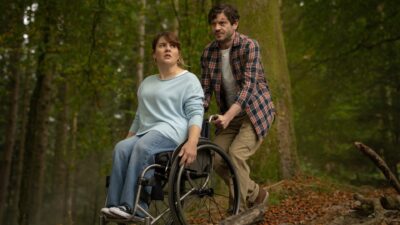
(Image credit: BBC/Mammoth Screen/James Pardon)
Environmental anxiety will inevitably percolate into the books writers produce during this era. Do you think fiction can shift how people feel or even behave regarding global issues, and do you feel that writers have a responsibility to tackle big ideas?
In truth I wish environmental anxiety – and other psychological aspects of this emergency – had already percolated a lot more into literature. Its shocking absence from most contemporary fiction was the reason that in 2019, I and a few other environmentally-concerned writers set up the Extinction Rebellion group Writers Rebel which later spawned the Rebel Library, a much-loved online resource for readers of climate environmental literature in all genres. In principle, I don’t think that writers have a “responsibility” to anything other than our craft and our intellectual and emotional integrity. But we’re living in unprecedented times. So I’d encourage any writer of contemporary or future-set fiction to reflect the scale of the rolling emergency – if only as backdrop – rather than to ignore or minimise it. Sure, readers like escapism. But they also like to feel they’re not alone in the darkness, and that there’s a bit of light.
Can you tell us anything about what you’re working on next?
The Rapture was the first in a cli-fi trilogy which is so loose that I’m probably the only person who sees it as a trilogy at all. The second volume, The Uninvited, came out in 2012 so the third is over a decade late. (What happened? Life, death and everything in between.) But the good news is, I’m delivering the final draft to my agent later this year.
Liz Jensen F.R.S.L, graduated in 1982 and worked as a print and radio journalist and producer in Hong Kong, Taiwan and the UK before publishing eight acclaimed novels including Hollywood-adapted The Ninth Life of Louis Drax, the climate thrillers The Rapture and The Uninvited, and the grief memoir Your Wild and Precious Life. She co-founded the Extinction Rebellion campaign group Writers Rebel and created the popular Rebel Library, an online collection of climate and ecological literature. Her work has appeared on radio, TV, film and on stage, and is published in more than twenty languages. The TV series of her 2009 novel The Rapture, starring Ruth Madeley and India Amarteifio, premiered on BBC1 in July and August, and is available on BBC iPlayer.