On Wednesday 18th November, Justice B.V. Nagarathna delivered the inaugural Cornelia Sorabji Memorial Lecture at Somerville College. The lecture was titled, “The Doors She Opened: Cornelia Sorabji and the Progress of Women’s Rights in India” and it covered the story of one of Somerville’s remarkable alumnae – Cornelia Sorabji while discussing some landmark judgements that steered the women’s rights movement in India.
Justice Nagarathna is a Judge of the Supreme Court of India. She was appointed to the Supreme Court in 2021, having previously served as a Judge of the Karnataka High Court. In the current seniority convention, she is in line to be the first woman Chief Justice of India in 2027.
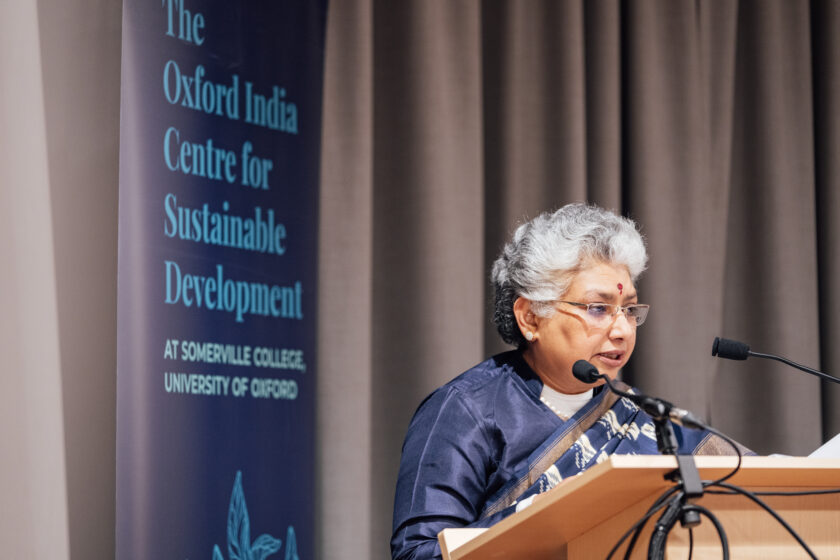
Justice Nagarathna will be the first female Chief Justice of India in 2027
Cornelia Sorabji arrived at Somerville College (then Somerville Hall) in 1889, just a decade after the institution’s founding as one of the first halls for women at the University of Oxford. She became the first woman to read law at Oxford and the first Indian woman to study at a British university. Although she passed her examinations in 1892, she could not receive her degree until Oxford recognised degrees for women three decades later.
“There could scarcely be a more fitting place for this reflection than Somerville,” Justice Nagarathna said.
She goes on to trace three interrelated transformations for women’s rights in India: the recognition of women as individuals able to claim rights for themselves; the evolution from formal equality to confronting structural discrimination; and understanding of justice as a means of transforming social, economic and institutional relationships.
At the heart of the lecture was a warning against equating individual achievements with equality of women as a whole.
“The existence of women in high public office does not establish that equality has been achieved throughout society,” Justice Nagarathna said. “A woman may hold a senior position while other women remain excluded from education, employment, property, or effective legal remedies.”
A recurring theme was the difference between rights that exist formally and the ability to exercise those rights in practice. “A judgment cannot, by itself, guarantee that every workplace becomes safe, every girl receives education, every woman obtains her lawful inheritance, or every victim of domestic violence secures timely protection,” she said.
Her emphasis on the fact that there could be no single account of women’s experience resonated with the audience – “There is no single experience of being a woman”, she said, mentioning caste, class, disability, religion, region and economic circumstances as factors that profoundly shape the obstacles women encounter.
“There is no single experience of being a woman”
Returning to the profession that Sorabji helped open to women, Justice Nagarathna called for attention not simply to entry into the law, but to women’s opportunities to advance within it. She reiterated her support for one-third reservation for women lawyers on government panels, including those representing public sector undertakings and in legal aid.
“If women are to participate equally in the administration of justice, their representation must extend beyond the right to enter the profession,” she said. “It must encompass opportunities to represent the State, advise public institutions, and participate in the exercise of legal authority.”
In the closing passages of the lecture, Justice Nagarathna turned to the choices and freedoms that remain unavailable to many women in India. She highlighted education, marital choice, the ability to pursue a career, inheritance and safety at home, at work and in public as fundamental rights.
“If the women are able to fulfil their choices and goals, I feel that the word ‘empowerment’ would pale into insignificance,” she said.
The lecture was hosted by the Oxford India Centre for Sustainable Development to celebrate the 160th birth anniversary and a decade of the Cornelia Sorabji Scholarship programme that funds a talented Indian student to continue their studies in Law at the University of Oxford.
The full text of the lecture is available here.
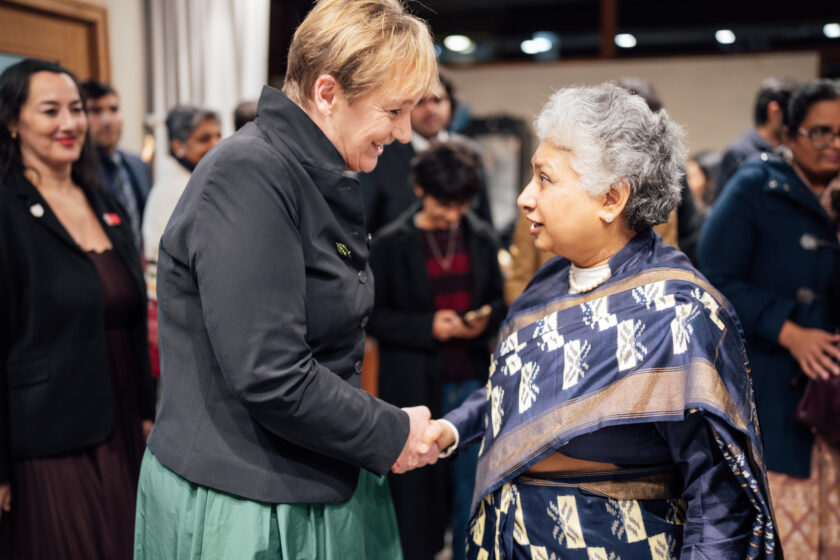
Justice Nagarathna meeting Ms Catherine Royle, Principal, Somerville College
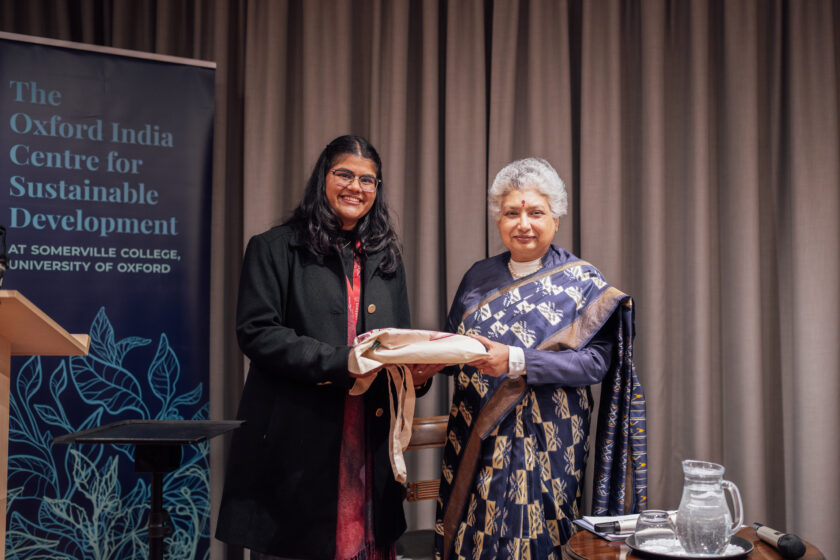
Justice Nagarathna with Nancy Goel, Cornelia Sorabji Scholar 2026
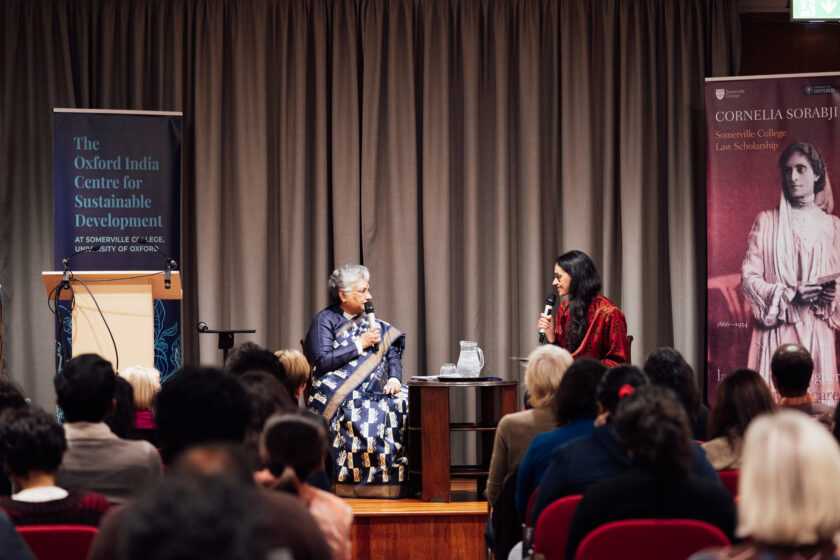
Justice Nagarathna in conversation with Prof. Radhika Khosla, Research Director of the OICSD